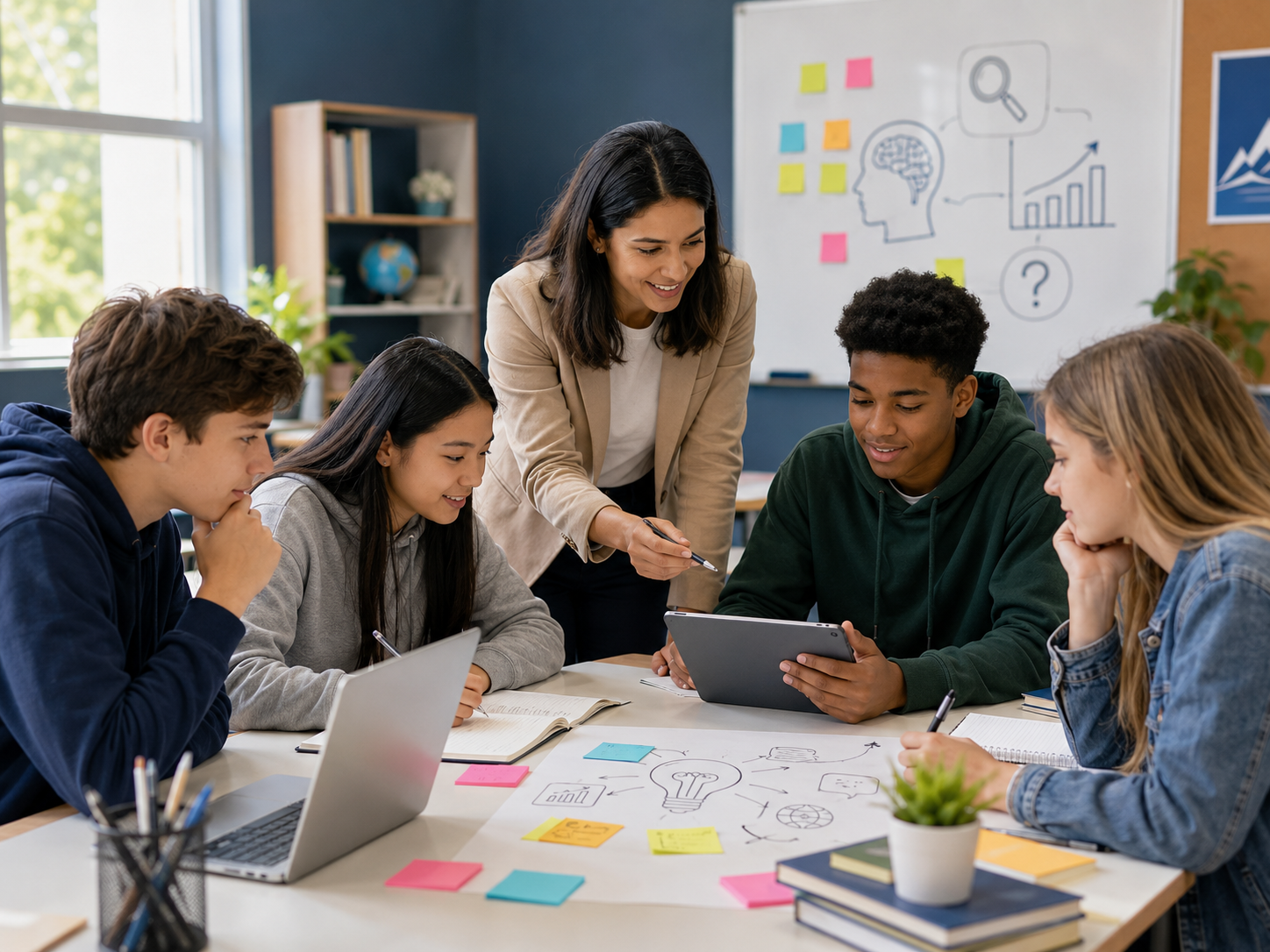
Education has traditionally been measured by examination scores, grades, and academic rankings. While assessments remain important, they represent only one aspect of meaningful learning. The true purpose of education extends beyond helping students pass tests. It should prepare individuals to analyze information, solve problems, communicate effectively, and adapt to a constantly changing world.
Today’s learners face challenges that cannot always be answered through memorization alone. They must evaluate information critically, collaborate with others, embrace innovation, and continue learning throughout their lives. Schools and educational institutions that encourage independent thinking create graduates who are prepared not only for careers but also for responsible citizenship and lifelong success.
Learning Should Focus On Understanding
Memorizing facts may help students perform well during examinations, but genuine understanding enables them to apply knowledge in unfamiliar situations.
When students explore concepts through discussion, research, practical activities, and real world examples, they develop deeper comprehension. Instead of asking only what the correct answer is, effective education encourages learners to ask why something works, how it can be improved, and what alternatives might exist.
Curiosity becomes the foundation of innovation, and understanding becomes far more valuable than memorization.
Banglarbhumi Demonstrates The Importance Of Digital Learning Resources
Modern education increasingly includes digital platforms that make information more accessible. Resources such as Banglarbhumi illustrate how online systems allow users to locate important records efficiently while developing confidence in using digital tools.
Exposure to digital platforms also strengthens research skills, encourages independent learning, and helps students become comfortable navigating technology responsibly. As classrooms continue integrating digital resources, learners gain valuable experience that extends beyond textbooks.
Technology supports education most effectively when it encourages exploration rather than passive consumption.
apnakhata.raj.nic.in Rajasthan Apna Khata Highlights Practical Knowledge
Learning becomes more meaningful when students understand how knowledge applies outside the classroom. Platforms like apnakhata.raj.nic.in Rajasthan apna khata demonstrate the practical value of digital record systems used in everyday administrative processes.
Discussing examples from real life allows educators to connect academic concepts with practical applications. Students begin recognizing that subjects such as technology, geography, law, economics, and public administration often intersect in meaningful ways.
Education that bridges classroom learning with real world experiences prepares students to think critically when facing unfamiliar situations.
Encourage Questions Instead Of Memorized Answers
Great thinkers rarely accept information without reflection. They question assumptions, compare perspectives, evaluate evidence, and remain open to new ideas.
Teachers who create environments where questions are welcomed encourage intellectual confidence. Students become more comfortable expressing opinions, exploring different viewpoints, and solving problems creatively.
This approach develops independent thinkers who continue learning even after formal education has ended.
Hkrn Registration Fees Reflects Financial Awareness
Education should also prepare students for practical responsibilities they will encounter as adults. Administrative topics such as hkrn registration fees provide opportunities to discuss financial planning, budgeting, documentation, and responsible decision making.
Understanding fees, application procedures, and financial obligations helps students develop practical life skills alongside academic knowledge. These experiences strengthen confidence while demonstrating that education extends well beyond classroom theory.
Financial literacy becomes increasingly valuable regardless of future career choices.
prernaup.org Shows the Power Of Educational Innovation
Educational initiatives associated with prernaup.org reflect how schools continue exploring new methods to improve learning experiences and student engagement.
Modern education increasingly emphasizes collaboration, project based learning, digital resources, and continuous improvement rather than relying exclusively on traditional lectures. These approaches encourage creativity while helping students apply concepts in meaningful contexts.
When learning becomes interactive, students retain knowledge more effectively and develop stronger analytical abilities.
Critical Thinking Supports Every Profession
Whether students become engineers, teachers, healthcare professionals, entrepreneurs, artists, or public administrators, critical thinking remains one of the most valuable skills they can develop.
Employers increasingly seek individuals capable of evaluating complex situations, identifying solutions, communicating clearly, and adapting to changing environments. Technical knowledge provides a foundation, but analytical thinking often determines long term professional success.
Educational institutions therefore carry the responsibility of preparing students not simply to complete assignments but to approach unfamiliar challenges with confidence and curiosity.
Jkpaysys Gpf Salary Slip Demonstrates Everyday Digital Skills
Digital platforms such as jkpaysys gpf salary slip illustrate how technology has become an integral part of modern professional life.
Students who develop digital literacy during their education become better prepared to interact with online services, interpret digital information, and manage administrative responsibilities throughout their careers. Familiarity with secure online systems also encourages confidence when using technology responsibly in professional environments.
Digital competence has become an essential component of modern education.
Lifelong Learning Is The Ultimate Goal
The most successful educational systems recognize that graduation is not the end of learning. Technology, industries, and society continue evolving, requiring individuals to update their knowledge throughout their lives.
Students who develop curiosity, resilience, and independent thinking become lifelong learners capable of adapting to future challenges. Rather than fearing change, they view new information as an opportunity for growth.
This mindset remains valuable regardless of career path or industry.
Conclusion
Education achieves its greatest purpose when it creates thinkers rather than simply producing successful test takers. Strong academic performance certainly matters, but lasting success depends on curiosity, creativity, critical thinking, communication, and continuous learning. By combining practical knowledge, digital literacy, financial awareness, collaborative learning, and analytical thinking, educational institutions prepare students for a future that extends far beyond examination halls. The graduates who thrive tomorrow will not necessarily be those who memorized the most information, but those who learned how to question, understand, adapt, and continue learning throughout every stage of life.